
How to Ask a Girl Out on Tinder & Hinge Without Getting Rejected (2026 Guide)
Edgar Bueno Depolito
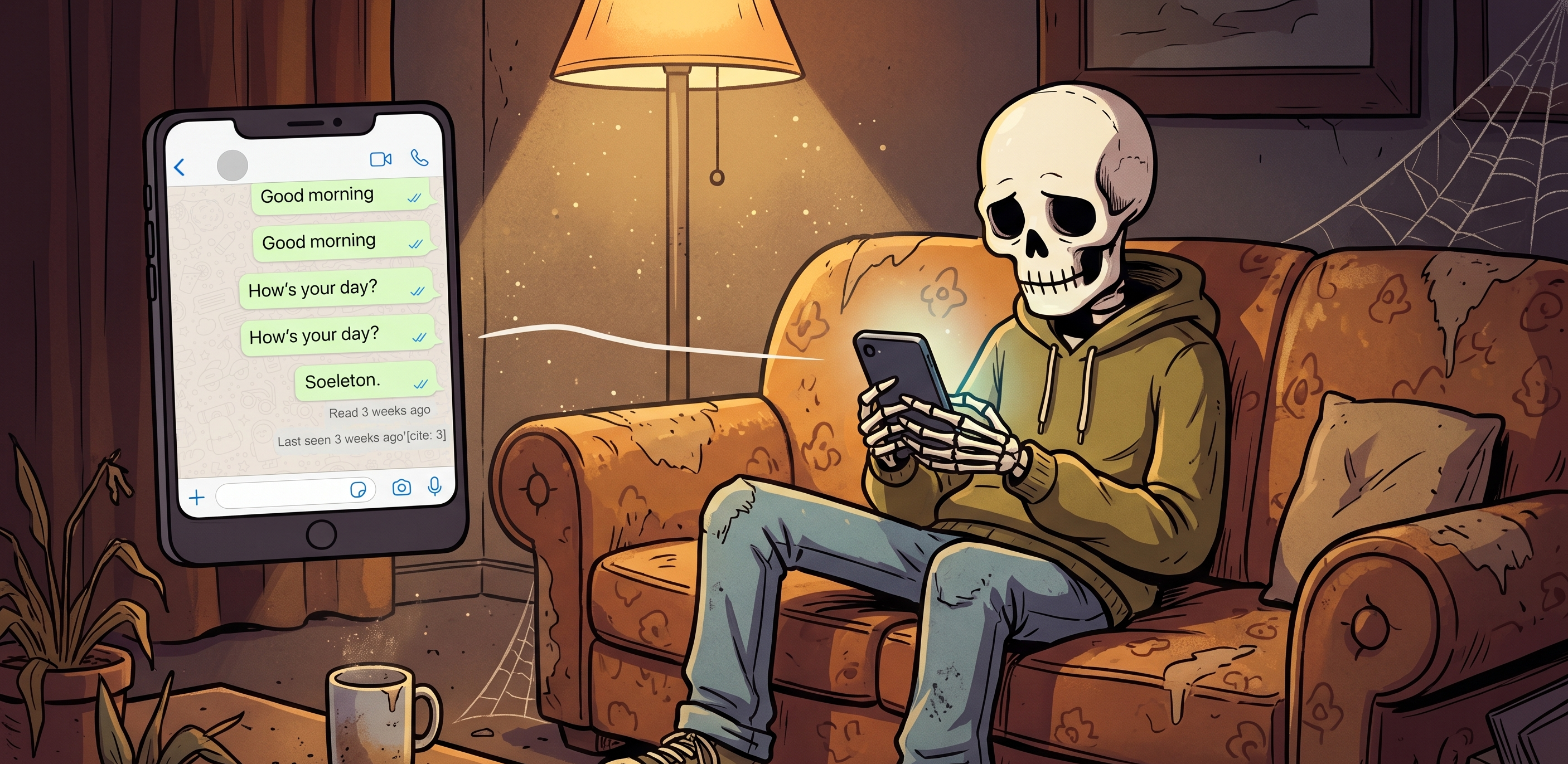
Friday, 10:00 PM.
You're sitting on your couch, staring at the screen of your phone. Your thumb is hovering over the keyboard like you are actively trying to defuse a bomb.
You matched with her on Hinge three days ago. She is exactly your type. The banter has been fantastic. You know the name of her golden retriever, you know she has an irrational hatred for cilantro, and you know she thinks 80s horror movies are peak cinema. You have successfully navigated the awkward initial stages of dating app small talk.
But there is a massive, incredibly heavy silence hanging over the digital room. You haven't asked the basic, fundamental question: "Are we going to see each other, or am I just going to be your free digital therapist for the next two weeks?"
If you are like most guys, the fear creeping up your spine right now is paralyzing. You want to ask her on a date, but your brain starts playing a terrifying highlight reel of potential rejections. What if she says she's busy? What if I ask too early and look like a desperate creep? What if I wait too long and she unmatches me for being boring? How exactly am I supposed to word this invitation without sounding like a corporate HR manager trying to schedule a Zoom meeting?
Congratulations. You have officially entered the "Texting Purgatory." And if you don't get out soon, you are going to become just another forgotten notification.
I know exactly how this feels because, for a very long time, I was the undisputed king of the Texting Purgatory. I would match with incredible women, build a massive amount of rapport, talk to them for two solid weeks, and then absolutely choke when it came time to ask them out. I would send the most cowardly, apologetic, open-ended invitations known to mankind. And then I would watch in horror as they slowly ghosted me.
I lost perfectly good dates to guys who were half as funny as me, simply because they had the nerve to set a time and a place. The brutal truth I learned the hard way is that the modern dating landscape does not reward the "nice guy" who waits for permission. It rewards the guy who understands how human attention actually works.
In this guide, we are going to strip away the bullshit. We are going to look at the raw, ugly truth of why women reject men they actually like, the exact timing of when you need to make your move, and the specific, psychological framework you can use to secure the date with zero fear of rejection.
1. The Neuroscience of the "No": You Are Giving Her Homework
Before we talk about what to say, we have to talk about why you are getting rejected right now.
Most guys take rejection highly personally. When a girl says, "Ah, I'm super busy this week, maybe next time!", we immediately look in the mirror. We think our photos aren't good enough, our job isn't prestigious enough, or our jawline isn't sharp enough.
But if she is actively texting you on a dating app, you have already passed the physical attraction test. So why did she say no?
She didn't reject your face. She rejected the spreadsheet you just handed her.
Let's look at the absolute worst (and most common) way men ask women out: "Hey, I'd love to take you out sometime. When are you free next week?"
We send this thinking we are being accommodating gentlemen. We think we are giving her the freedom to choose her schedule. But in 2026, where human attention is hyper-fragmented and burnout is the baseline state of existence, you are not giving her freedom. You are giving her Logistical Overload.
According to extensive research on Decision Fatigue by the American Psychological Association (APA), the human brain has a severely limited amount of cognitive bandwidth. When we are forced to make too many decisions, our prefrontal cortex short-circuits. We begin to mechanically reject new options simply to preserve our sanity.
Think about her reality. She is managing a career, avoiding her boss's emails, trying to go to the gym, keeping up with three different group chats, and staring at an inbox full of 50 other guys trying to get her attention. Her brain is exhausted.
When you ask, "When are you free next week?", her brain has to do the following:
- Open a mental calendar.
- Cross-reference her work schedule, her gym schedule, and her social plans.
- Weigh the emotional risk of meeting a stranger from the internet versus staying home and watching Netflix in sweatpants.
- Calculate the commute to a hypothetical, undecided location.
- Formulate a polite text response that proposes a day without sounding too eager.
That is an immense amount of Cognitive Friction. Because the request requires too much mental labor, her brain looks for the emergency exit. The easiest, lowest-friction decision she can make is to simply claim she is "swamped with work."
You didn't get rejected because you aren't attractive. You got rejected because you forced her to be the project manager of your date.
2. The Timing Matrix: The High Water Mark
Even if you have the perfect script, deploying it at the wrong time is digital suicide. Timing is everything, and men usually ruin it by living in one of two extremes.
Extreme 1: The Panic Strike (Asking Too Early)
This is the guy who matches on Bumble and within three messages sends: "You're gorgeous. Drinks tonight?"
This isn't confidence; it's a spray-and-pray panic attack. It signals to the woman that you have zero standards and are just throwing darts in the dark. Because you haven't established a baseline of trust or banter, her "Compliance Threshold" is non-existent. You are asking a complete stranger to drop her evening plans for a guy who couldn't even be bothered to ask her last name. The result is a swift, hard rejection.
Extreme 2: The Digital Therapist (Asking Too Late)
This was my personal specialty. This is the guy who texts her "good morning" every day. He asks how her presentation went at work. He comments on all her Instagram stories. He provides immense emotional validation for three solid weeks, waiting for a magical, risk-free moment to ask her out.
Here is the brutal truth: human attraction does not appreciate linearly like a savings account. It is highly volatile. If you do not escalate the interaction into the real world, the sexual tension evaporates. You transition from a "potential threat/lover" into a "safe, non-threatening digital friend." By the time you finally ask her to get coffee, she hits you with the devastating: "I actually just see us as friends."
The Solution: The High Water Mark
The only mathematically correct time to ask a girl out is at the High Water Mark of the conversation.
The High Water Mark is the peak emotional spike of your digital interaction. It happens when:
- You have bypassed the awkward "how was your weekend" small talk.
- You have made a joke, a tease, or a strong observation that made her laugh.
- She is replying quickly, using expressive emojis, and actively investing in the chat.
When she sends a text like, "Hahaha oh my god, that is literally exactly what happened to me today!"... STOP.
Do not reply with another joke. Do not ask her another question about her day. You have hit the peak. You must leverage that exact spike of dopamine to pivot directly into the date invitation. In a normal Tinder or Hinge dynamic, this High Water Mark happens between message 8 and message 15. Do not wait for message 50.
3. The 4 Catastrophic Mistakes Men Make
Before we get to the exact script you should use, we need to surgically remove the toxic vocabulary you are currently using. If your dating app strategy relies on any of these four frameworks, you are actively driving your conversion rate into the wall.
Mistake 1: The "Hangout" Trap
- "Hey, we should totally hang out sometime!"
- "Wanna chill this weekend?"
The word "hangout" is the coward's shield. Men use it because they are terrified of stating clear romantic intent. They think that if she says no to "hanging out," it won't hurt their ego as much as if she said no to a "date." But women do not want to "hang out" with a stranger from Tinder. They want to be taken out by a decisive, high-value man. If you use platonic language, you put yourself in the platonic bucket.
Mistake 2: The Open-Ended Burden
- "What does your schedule look like this week?"
- "What kind of places do you like to go on dates?"
As we established in the Neuroscience of the "No," this is pure logistical homework. A high-value man does not outsource the logistics to the woman. He curates the experience and leads.
Mistake 3: The Over-Investment (The Try-Hard)
- "Can I take you to that new 5-Star Italian place on Saturday night?"
Taking a girl to a Michelin-star restaurant on a first dating-app date is a massive tactical error. It feels heavy. It feels suffocating. She doesn't know you. If you turn out to be weird, boring, or creepy, she is trapped at a white-tablecloth dinner for two hours waiting for the check. A first date should always be low-commitment, highly localized, and easy to escape—like grabbing a coffee, a matcha, or a quick cocktail.
Mistake 4: The Permission Seeker
- "Would it be okay if maybe we grabbed a coffee sometime?"
- "I know you're super busy, but..."
Never apologize for wanting to see a beautiful woman. Framing your invitation as a massive favor she is granting you instantly destroys your polarity. It puts her on a pedestal and forces you to beg for scraps of her time.
4. The MatchGenius Blueprint: The Low-Friction Double Bind
If we eliminate the homework, eliminate the heavy pressure, and eliminate the hesitation, what is left?
We are left with the ultimate behavioral cheat code: The Low-Friction Double Bind.
The Double Bind is a psychological framing technique I learned studying high-level sales and negotiation tactics. It involves presenting someone with two distinct options, both of which lead exactly to the outcome you want.
When you apply this to dating, it creates a powerful illusion of choice that completely bypasses her logical defense mechanisms. Instead of asking her if she wants to go out (a Yes/No binary where her brain defaults to "No" to save energy), you assume the sale. You operate from the unshakeable, arrogant premise that she obviously wants to meet you. The only remaining detail is the schedule.
The Anatomy of the Flawless Invitation:
- The Soft Pivot: A smooth transition from the current banter to the real world.
- The Assumptive Statement: Stating your intention with absolute, unapologetic confidence.
- The Double Bind: Offering two highly specific, low-commitment logistical choices.
The Script in Action: "I'm enjoying this, but I'm infinitely better in person. Let's get a drink this week. Are you more of a Tuesday at 7 or a Thursday at 8 type of girl?"
Look at the surgical precision of this text.
- Zero Homework: She doesn't have to scan her entire week. She just has to look at Tuesday and Thursday.
- Low Commitment: It's just a drink. If you suck, she can leave after 45 minutes.
- High Confidence: You aren't asking for permission.
- The Hijack: Her brain stops asking, "Do I want to go on a date with this guy?" and instinctively starts calculating, "Am I free on Tuesday or Thursday?"
You just bypassed the rejection filter entirely.
5. Case Studies: Transcripts from the Trenches
Theory is great, but executing this under pressure is where men fall apart. Let's look at three real, deep-dive case studies from my own coaching files, complete with the internal panic and the flawless execution.
Case Study 1: The Hinge "Conservative" Pivot
The Context: My client, let's call him Mark, matched with a girl on Hinge who had a very wholesome, slightly conservative profile. She was a teacher. Mark was terrified of coming off too strong and scaring her away. He had been texting her for three days about her golden retriever. He was inches away from falling into the Friendzone.
The Internal Panic: Mark texted me: "Bro, she's amazing but I think if I ask her to a bar she's going to think I just want to hook up. Should I ask her what days she's free next week?"
The Intervention: I stopped him immediately. I told him that asking for her schedule was a death sentence. We needed to use a Double Bind that catered to her safety preferences, offering a daytime option alongside an early evening option.
Mark: I have a working theory that anyone whose dog looks that innocent is secretly a menace to society. I need to verify this in person. Mark: Let's meet up this week. Are you more of a 'Coffee on Wednesday afternoon' or 'Margaritas on Thursday early evening' vibe? Her: Hahaha my dog is an angel, I promise! And I'm definitely a margaritas girl, Thursday works perfectly!
The Breakdown: Mark used a playful pattern break (the menace theory) to spike dopamine. Then he deployed the Double Bind. By offering coffee (ultra-safe) and margaritas (fun, but early evening), he gave her the illusion of control over the safety of the date. She picked Thursday, and Mark secured the date without a single drop of sweat.
Case Study 2: The Bumble High-Paced Transition
The Context: Bumble moves fast. Women on Bumble are heavily inundated with messages, and the conversations tend to expire quickly. I matched with a girl who opened with a standard "Hey!". We had a rapid-fire, 6-message debate about the best sushi spot in the city.
The Internal Panic: The conversation was red-hot, but I knew from experience that if I let the banter drag on for another 20 messages, the dopamine would crash. She would close the app and forget about me. I needed to strike at the High Water Mark immediately.
Me: If your favorite spot is Sugarfish, we are going to get along just fine. Me: Bumble is completely destroying my battery life anyway. Let's go debate sushi rankings in the real world. Are you free for a quick drink Monday or Wednesday night? Her: Lol my battery is dying too. Wednesday at 8?
The Breakdown: I used the "Battery Life" excuse—a classic, high-status logistical reason to get off the app immediately. I stated my intention clearly and dropped the Double Bind. Notice I didn't invite her to a $200 sushi dinner; I invited her to a "quick drink" to debate the sushi. Low friction, high conversion.
Case Study 3: Resurrecting the WhatsApp Graveyard
The Context: A client transitioned a girl from Tinder to WhatsApp. He sent a boring "How was your day?" text. She replied with "Good, just busy." The conversation stalled for 48 hours. He was in the dreaded Texting Purgatory.
The Internal Panic: He was ready to send a desperate double-text: "Guess you're too busy for me lol." I had to physically restrain him from sending that digital suicide note. We needed a Pattern Break to wake the thread up, followed instantly by a Double Bind.
Client: I just walked past a girl wearing the exact same ridiculous oversized jacket from your second Tinder photo. It reminded me that you owe me a drink for stealing my Spotify playlist. Client: Let's do cocktails this week. Do you prefer Tuesday at [Bar Name] or Thursday at [Bar Name]?
The Breakdown: We utilized a strong Cognitive Pattern Break (making a highly observational, absurd assumption about a jacket and a playlist) to shake her out of her digital coma. Once her attention was hijacked, we didn't wait for her to reply to the joke. We immediately dropped the Double Bind with specific locations. She picked Tuesday.
6. Handling Objections: The Pivot Matrix
Let's be realistic. Even with a flawless Low-Friction Double Bind, you will occasionally encounter an objection. Life happens.
A low-value man panics when faced with an objection. He gets angry, or he immediately starts throwing out alternative days like a desperate salesman trying to close a bad deal. A high-value man does not panic; he categorizes the objection and pivots seamlessly.
There are two distinct types of rejections in the digital dating landscape. You must know how to handle both.
The "Soft No" (Logistical Conflict)
A Soft No occurs when she is genuinely attracted to you and wants to meet, but her schedule legitimately does not align with the two options you provided in your Double Bind.
Her: "Ah I would honestly love to, but I'm completely swamped with a massive project at work this Tuesday and Thursday! 😭"
The Indicators: She uses positive reinforcement ("I would honestly love to"), she provides a specific, plausible reason (work project), and she uses expressive emojis. She is rejecting the time, not the man.
The Flawed Reaction: "Oh no worries! What about Friday? Or Saturday morning? I'm free Sunday too!" (This destroys your perceived value and makes you look like you have no life).
The High-Value Pivot: "No worries, sounds like a brutal week. Survive the project, and we'll aim for sometime next week when you're free. Good luck!"
By pulling away slightly, wishing her well, and letting her come to you, you demonstrate incredible, unbothered confidence. You are telling her: I am a busy man, I offered you a slot on my schedule, you couldn't make it, so the ball is in your court. She will almost always reply a few days later to set up the date herself.
The "Hard No" (Lack of Investment)
A Hard No occurs when her response is vague, non-committal, and lacks any alternative solution.
Her: "I'm just really busy this week." (Or, she just leaves the invitation on read).
The Indicators: Zero positive reinforcement, no specific excuse, no attempt to reschedule, and cold punctuation.
The Flawed Reaction: "Are you free next week then?" or "Did I say something wrong?"
The High-Value Pivot: You do absolutely nothing. You do not reply. You do not demand an explanation. You archive the chat and move your attention to women who possess high biological intent. A high-value man does not negotiate desire. If she cannot match your energy, she does not get your time.
7. Command the Conversation: Stop Guessing, Start Executing
Understanding the behavioral framework of the Double Bind, mastering the Neuroscience of the "No," and learning the precise timing of the High Water Mark gives you an unfair, almost lethal advantage in the modern dating market.
You now possess the architectural knowledge to structure invitations that mathematically minimize rejection.
But I also know that reading an article and executing this under pressure are two very different beasts.
When you match with a top-tier, 10/10 woman on Hinge, the theory goes out the window. Your heart rate spikes. Your logical brain shuts down. You stare at the blinking cursor, terrified of saying the wrong thing, terrified of misjudging the "High Water Mark," and terrified of messing up the exact phrasing of the Double Bind.
While a line of guys is sweating cold, rewriting the same message eight times and praying they don't sound like idiots, there is a group that simply stopped guessing.
MatchGenius isn't some 'magic pickup artist guide'. It's just a way for you to stop burning neurons trying to decode a stranger's brain.
We map what she wants to hear based on her psychographic profile, and we hand you the exact, customized Low-Friction Double Bind script you need to transition her from a digital pixel into a real-world date. It's almost like cheating on a test, but the test is your date on Tuesday night.
You don't need to be a behavioral psychologist to get dates. You just need the right arsenal.
Stop living in the Texting Purgatory. Stop acting as a digital therapist to women who are actively going on dates with more decisive men.
Frequently Asked Questions
What is the best message to ask a girl out on Hinge?
The best message to ask a girl out on Hinge utilizes the "Low-Friction Double Bind" behavioral technique. Instead of asking open-ended questions like "When are you free?", you should state your intention confidently and offer two specific, low-commitment choices: "I'm really enjoying this, let's get a drink this week. Are you more of a Tuesday at 7 or Thursday at 8 type of girl?" This minimizes cognitive friction and bypasses her logical rejection filters.
When is the right time to ask a girl out on a dating app?
The mathematically optimal time to ask a girl out on a dating app is at the "High Water Mark" of the conversation. This is the peak emotional moment, typically occurring between the 8th and 15th message, right after a successful joke or playful tease where she responds enthusiastically and quickly. Asking too early signals desperation, while waiting too long degrades the sexual tension and places you in the friendzone.
What to say if she says she is busy when you ask her out?
If she says she is busy, you must first categorize it as a "Soft No" (she gives a specific reason and seems genuinely disappointed) or a "Hard No" (a vague "I'm busy" with no alternative). For a Soft No, do not immediately offer more days; maintain your high value by replying: "No worries, survive your busy week and we'll aim for next week. Good luck!" This demonstrates confidence and non-neediness, prompting her to chase you later. For a Hard No, simply do not reply and move on.
How to ask a girl for a date without sounding desperate?
To ask a girl out without sounding desperate, you must never ask for permission (e.g., "Would it be okay if we got coffee?") and never invite her to high-pressure, expensive dinners on the first date. You maintain a high-status frame by keeping the invitation localized, low-commitment, and decisive. You assume the sale and present the date as an opportunity for two equals to evaluate each other in the real world.